
AI Agent E-commerce Customer Service: When to Move from a Simple Chatbot to an AI Agent?
From a Simple Chatbot to an AI Agent: Telling Signs to Modernize Your E-Commerce Customer Service
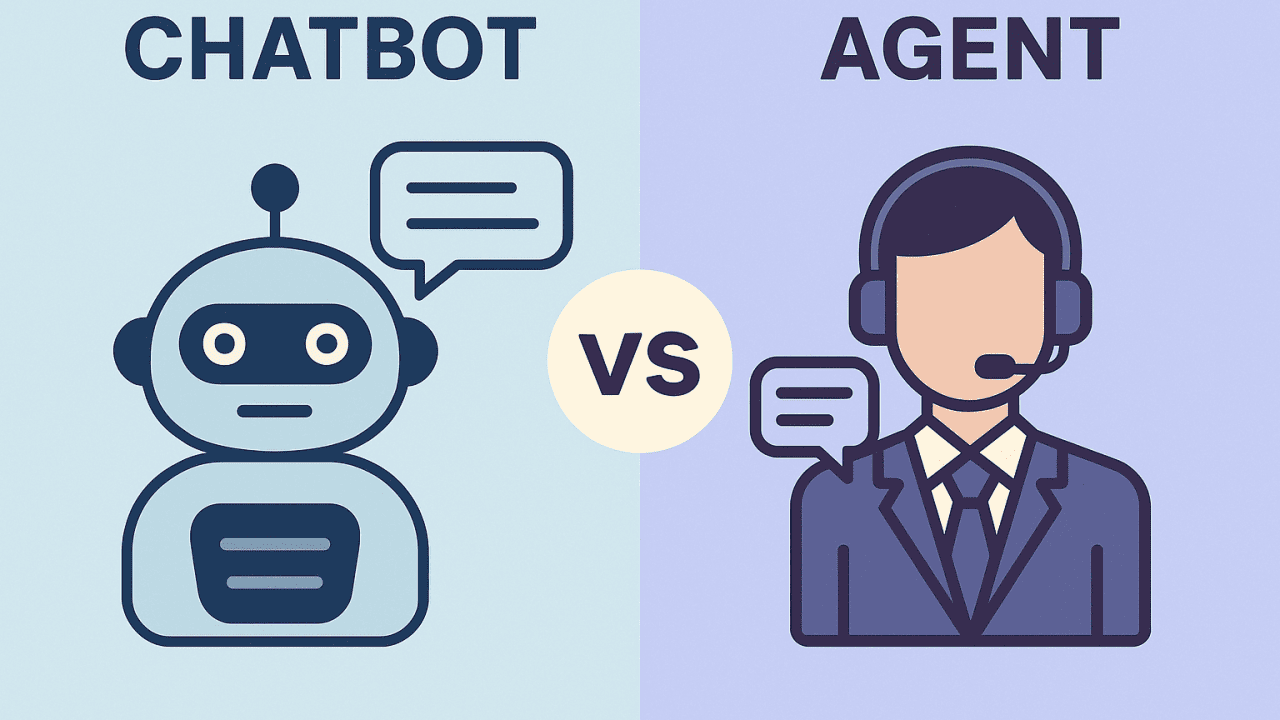
For years, the chatbot has been the default solution for automating e-commerce customer service. A decision tree, a few pre-programmed answers, and you were all set... in theory. In practice, most merchants know the frustration: a customer stuck in a loop of menus, a slightly complex question that crashes the scenario, and ultimately a transfer to a human, meaning no real time-saving for your teams.
The arrival of the e-commerce customer service AI agent is radically changing the game. Unlike the traditional chatbot, this agent understands natural language, accesses your store's data in real time (orders, inventory, logistics), and can resolve a request from end to end without a rigid script. The question is no longer "should we automate customer support?" but rather "at what point has my current chatbot become a bottleneck rather than a strategic asset?"
What is the concrete difference between a simple chatbot and an AI agent?
Traditional chatbots operate on strict rules: if the customer types a specific keyword, a specific response appears. It is quick to set up, but extremely rigid. As soon as a request falls outside the planned scope, it fails and redirects the customer to a form or a dead-end loop.
The AI agent, on the other hand, relies on advanced language models (LLMs) capable of grasping the real intent behind a sentence, even if it contains typos or multiple simultaneous queries—for example: "where is my order, and can I also exchange the size?" It becomes a true assistant capable of:
Consulting the precise status of an order, refund, or package in real time.
Offering autonomous solutions (exchanges, store credit, discounts) while strictly complying with your business rules.
Answering precisely regarding the technical characteristics of a product (materials, compatibility, size guide).
Intelligently escalating to a human only when the situation requires it, providing the agent with a contextual summary of the exchange.
The gain is massive: a measurable reduction in operational costs and consistent customer satisfaction, 24/7, even during weekends or peak activity periods.
Which signs indicate it is time to step up?
Your current chatbot has likely reached its limits if you identify these five friction points.
The human escalation rate is too high
A high-performing automation tool should absorb the majority of simple requests. If your human agents are still handling 80% of package tracking tickets, your chatbot is underutilized and no longer fulfilling its role.
Semantic variations block the system
"My order hasn't arrived," "Where is my parcel?", "Package not received" — if you have to configure each variation manually, you are wasting your time. AI natively understands these nuances of language without exhaustive parameter settings.
Support saturates during seasonal peaks
Sales, Black Friday, holiday seasons: these moments should generate revenue, not paralyze your customer service. An AI agent absorbs volumes effortlessly, whereas a classic chatbot or a human team quickly saturates.
The customer journey is degraded
Endless menu loops or off-topic responses harm your brand image and increase cart abandonment rates, even among customers who were determined to buy.
Your support agents are becoming robots
If your team spends their day copy-pasting answers to the same basic questions, you are wasting their talent on tasks with low added value: retention, personalized advice, and sensitive dispute management.
What does an AI agent concretely change for your store?
Beyond permanent availability, the impact is measured across four key performance indicators (KPIs).
Cost optimization
You maintain a customer service team of a constant size while supporting order volume growth, without recruitment proportional to the activity.
Drastic reduction in waiting time
Instant response has become the expected standard for consumers in 2026. A customer waiting hours for a simple answer is a customer who is already doubting the quality of their shopping experience.
Standardization of quality
Unlike humans, whose performance varies based on fatigue or experience, AI applies your guidelines with perfect consistency, regardless of request volume or time of day.
Direct impact on average order value
A customer reassured about delivery times or return policies before paying is a customer who completes their purchase. The AI agent can even naturally suggest complementary products throughout the conversation.
Want to evaluate if your store is ready for this transition? Our e-commerce automation service helps you identify the most profitable levers for your business.
How to approach the transition without turning everything upside down?
Moving to an AI agent does not mean a traumatic technological disruption. A progressive and agile approach is recommended to secure the transition.
Prioritize high-volume flows: Start by delegating order tracking and FAQ questions to the AI before gradually expanding its scope of action.
Keep the human in the loop: Maintain a smooth escalation path for complex or emotional situations where human expertise remains irreplaceable.
Connect AI to real data: The agent's intelligence directly depends on its access to your CRM, inventory, and logistics—an AI disconnected from your systems remains just an upgraded chatbot.
Iterate with data: Measure the automatic resolution rate and adjust the AI's tone and rules along the way based on real customer feedback.
Discover our e-commerce automation packages and find the formula tailored to your customer service ticket volume.
Does the simple chatbot still have a place in 2026?
The simple chatbot fulfilled its role at a time when e-commerce automation was in its infancy. For the modern merchant looking to optimize costs while offering a premium, continuous customer experience, the AI agent is no longer an option, but a necessary evolution.
The real question is no longer whether this transition will happen, but when you will choose to implement it—before or after your competitors do.