Predictive Inventory Management via IA : The Art of Targeting «Zero Stockouts»
How artificial intelligence is revolutionizing the supply chain to anticipate demand and eliminate stockouts ?
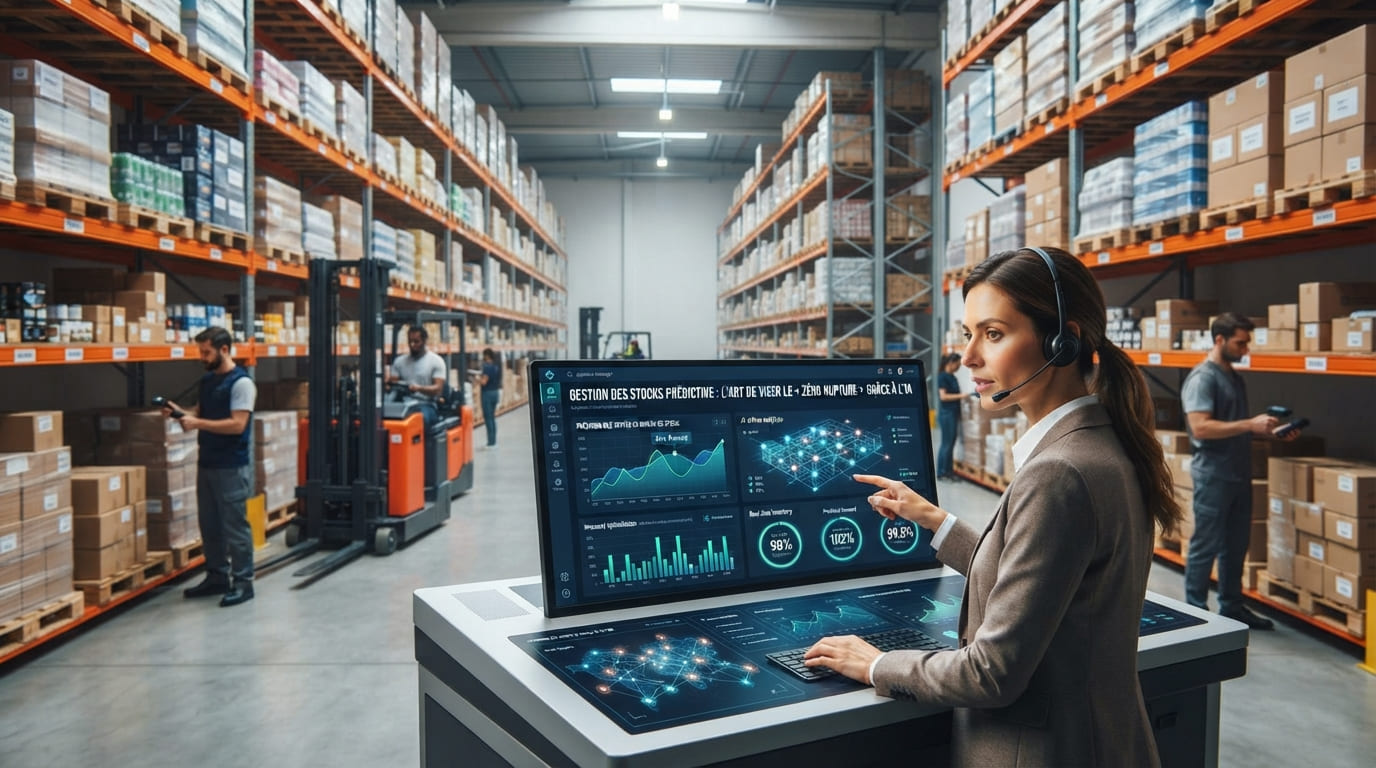
In the world of e-commerce, a stockout is much more than a simple product unavailability: it is a gift handed to your competitors. A customer who arrives at an "out of stock" product page is a customer who leaves often permanently for another store. For a long time, inventory management was a matter of intuition or manual statistical calculations, always lagging behind market reality. Today, AI predictive inventory management for e-commerce is radically changing the game. It transforms your inventory from a passive cost center into a true lever for proactive growth. At Automate AI, this is one of the most requested projects by our e-commerce clients: they no longer just want to track their stock, they want to anticipate it.
Why Traditional Inventory Management Has Become Obsolete ?
The classic model relies on the past: looking at what was sold last year during the same period to forecast tomorrow's stock. But consumer behavior changes at lightning speed. Social media buzz, a sudden weather shift, or a new consumer trend can empty your shelves in just a few hours. Manual methods or those based solely on fixed alert thresholds have two major flaws:
Overstocking: You tie up precious cash flow in products gathering dust in a warehouse.
Understocking: You suffer critical stockouts during peak demand periods, such as Black Friday or sales seasons. These two pitfalls never cancel each other out: a company that overstocks on certain references and runs out on others accumulates both costs simultaneously, without even realizing it until someone precisely measures the turnover rate per product.
How AI Anticipates Your Replenishment Needs ?
Artificial intelligence doesn't just count your inventory; it analyzes thousands of variables to predict future demand with surgical precision.
Real-Time Trend Analysis AI crosses your internal sales data with external data (seasonality, Google search trends, local events, or even weather). It detects weak signals that escape the human eye and adjusts your procurement needs even before shortages become visible.
Cash Flow Optimization By precisely predicting demand, you only buy what you actually need. You free up working capital, reduce storage costs, and limit the risk of unsold inventory ending up in margin-destroying sales.
Automated Supplier Orders The ultimate advantage of AI is its ability to act without waiting for your manual validation for recurring products. It can generate automated purchase orders to your suppliers as soon as it detects a risk threshold, ensuring a perfect lean flow.
Intelligent Reference Prioritization Not all references have the same business impact. A predictive system can classify your products according to their criticality (high-margin best-sellers, loss leaders, niche references) and apply differentiated safety rules: a larger safety stock for top sellers, leaner stock for secondary references.
The Business Benefits of Reaching Zero Stockouts
The "zero stockout" objective is not just technical; it directly impacts your profitability:
Elimination of lost sales: Every available product is a secure potential sale.
Improved customer experience: Stock reliability is the first pillar of customer trust.
Better logistics planning: By anticipating volumes to process, you optimize the work of your order-fulfillment teams.
Reduction of immobilized capital: Less cash tied up in dormant stock, more leeway to invest elsewhere.
Which Indicators to Track to Measure Progress?
Before and after implementing a predictive system, a few indicators help objectify the gains:
Stockout rate: The percentage of time a high-demand reference is unavailable for sale.
Inventory turnover rate: How quickly stock renews, revealing overstocking levels.
Service rate: The share of customer orders delivered without delays caused by stockouts.
Dormant stock value: The amount tied up in slow-moving references for over X months. Tracking these four indicators before switching to a predictive system makes it easy to precisely quantify the gains achieved, rather than relying on a general impression of improvement.
How to Move to AI-Driven Management ?
The transition doesn't happen overnight, but it has become essential for merchants looking to scale. The idea is to connect your management tools (PrestaShop, WooCommerce, ERP) to an AI agent capable of analyzing your flows. Concretely, implementation usually follows four steps:
Audit of your catalog and sales history to identify critical references and data quality.
Connection of data sources: E-commerce platform, ERP, and relevant external data for your sector (weather, search trends).
Pilot phase on a catalog segment, often best-sellers, to validate forecast reliability before a full rollout.
Gradual expansion and automation of supplier orders, with a human validation threshold adjustable based on your confidence level in the system.
If you want support in this transformation, our e-commerce automation service handles the integration of predictive systems connected to your inventory, order, and logistics data, allowing you to regain total control over your inventory without disrupting your current operations.
Limitations to Keep in Mind
Historical data quality conditions forecast reliability: sales histories that are too short or incomplete limit model accuracy, especially for new references with no history.
Completely unprecedented events remain hard to anticipate: AI predicts based on signals and trends, and cannot replace a minimum of human vigilance regarding supply chain disruptions or exceptional events.
Automated supplier orders without supervision can, in case of model drift, generate excessive orders—keeping a human validation threshold is recommended during the first months of use.
In Summary
Predictive inventory management is no longer reserved for distribution giants. With AI, every e-commerce store can now optimize its supply chain to gain agility, cash flow, and customer satisfaction. The question is no longer whether you should automate, but how many sales you are still losing today due to a lack of visibility over your inventory.